









- Home
- Latest News
- About Us
- Membership
- Events
- Services
- Suppliers

What does Pancake Day celebrate?
Pancake Day, or Shrove Tuesday, is the traditional feast day before the start of Lent on Ash Wednesday. Lent – the 40 days leading up to Easter – was traditionally a time of fasting and on Shrove Tuesday, Anglo-Saxon Christians went to confession and were “shriven” (absolved from their sins).
When is Pancake Day celebrated?
Tuesday, 21 February
Who celebrates this day?
Pancake Day is also known around the world as Shrove Tuesday. It falls on the day before Ash Wednesday each year, the first day of Lent. Pancake Day was originally a pagan holiday in which eating pancakes during Shrovetide week was extremely important. The word shrove is derived from the word shrive which means to gain absolution from one's sins, through penance, which is important before the beginning of Lent. In the Christian faith Pancake Day is sometimes referred to as Pancake Tuesday and Fat Tuesday. On Pancake Day the main activity is the consumption of pancakes, which is used by some organizations as a means to raise money for charities.
Activities – How to celebrate
• Personal Social Emotional - Do they like Pancakes? Likes and dislikes, which toppings and fillings do the children prefer?After cooking the pancakes, let the children wash up a few of the dishes to show them how it is good practice to clean and look after the equipment.
To get EXCEEDING for the second time is a wonderful validation of our evolution and growth over 19 years.
We are a stand-alone centre and can focus clearly on it. A centre is a bit like the human body because the whole is made up of small and large parts, which are connected. What happens to one part can affect another – strengthen or weaken. We need to nourish every part.
The key to our “body” is involvement, starting at the top. We nip and tuck strategies and policies to suit our vision. Then maintenance is patient and consistent and persistent! Child care is part education, part hospitality and part nursing – we remember to smile, be helpful and stay healthy.
Prospective parents and new staff regularly say the environment and atmosphere is welcoming and home-like. Our licence is for 42 and we have two rooms – toddlers and preschool.
Educational leadership is dedicated and driven by curiosity and wonder. The enthusiasm and language skills in the preschool room are a product of really liking children (who would have thought!) and celebrating their daily achievements. Routines are thoughtful and reassuring for the children, especially for the toddlers for whom we are often the bridge between home and a wider social circle.
Communication is a huge element. We encourage a non-judgemental culture. Genuinely happy and cooperative behaviour between adults rubs off on children and creates a cycle of engage/listen/respond
We support educators’ wellbeing and professional development. Personal needs are acknowledged and we try to be as flexible as possible to take care of them. Trainees are not terminated because moving up a level makes them too expensive, and all educators are encouraged to gain further qualifications. The bottom line is still OK and quality improves! Educators are encouraged to put forward ideas and request specific equipment because by doing so they are motivated to follow through. They then have ownership of the idea and the power to contribute.
This mind-set keeps staffing stable and creates a wide range of ages and experience. From top to bottom we try to put ourselves in the other’s shoes and encourage this in the children too.
Responsibilities are shared so there are no martyrs or misfits! The roster and job lists are as fair as humanly possible. The QIP is divided up and everyone builds on their understanding of an area. It gives meaning to why the regulations and rules exist, and over time a better understanding of smoothly running the centre.
Parents write moving testimonials which make our educators’ long days (even hunting down something on the internet at home in their pyjamas) and careful planning-with-love so worth it. Parents note how settled, socialised and prepared the pre-schoolers are for school, after a year or more of our nurturing and guidance. They mention how their toddler joins a group on arrival and is still playing happily at pick-up. Their toddler is now fully toilet trained too! Reading between the lines, these testimonials also express appreciation for the support we give parents and guardians in their times of stress. There is always a sympathetic and constructive ear.
Our vision is to provide an educationally progressive yet homelike environment, where children are safe and valued, where we respond to the aspirations our families have for their children and where RSK is an integral part of the local community
What does Random Acts of Kindness Day celebrate?
Random Acts of Kindness Day is all about bringing joy to others when they least expect it. The day falls on February 17th this year, and it's easy to join the movement to spread kindness in your community.
When is Random Acts of Kindness Day celebrated?
Friday, 17th February
A Few Quotes of Kindness:
What do people do to celebrate?
Unique ways for you to celebrate Random Acts of Kindness Day:
• Let somebody go first.
• Help a friend with their work.
• Ask somebody who is by themselves to come and play.
• Let somebody go in front of you in a line.
• Bring flowers for a grown-up.
• Hold the door open for somebody.
• Give somebody a hug.
• Give some toys to a charity shop.
• Pick up litter.
• Make a new friend.
• Smile at people.
• Feed the birds in the garden.
• Give a compliment to someone.
• Send a postcard to a friend.
Activities – How to celebrate
Group discussion regarding Random Acts of Kindness Day
Random Acts of Kindness Day Posters: https://www.twinkl.com.au/event/international-random-acts-of-kindness-week-2020r
For more Random Acts of Kindness Day Activities & Crafts for Kids click on the following link: https://www.twinkl.com/blog/world-kindness-day-random-acts-of-kindness-for-children

What does Valentine's Day celebrate?
Valentine's Day is a holiday that celebrates romantic love.
When is Valentine's Day celebrated?
Tuesday, February 14th
Who celebrates this day?
The day is widely celebrated in the United States, but is not a federal holiday. It is also celebrated in other areas of the world.
The day is mostly celebrated by people who are in love including couples that are married or just dating. Children celebrate the day as well with cards of friendship and candy.
What do people do to celebrate?
Couples generally celebrate the day with gifts and going out to dinner. Traditional gifts include cards, flowers, and chocolates.
Decorations for Valentine's Day are generally in red and pink colours and include hearts, Cupid with his arrow, and red roses. Cupid is a popular symbol of the holiday because in mythology his arrow strikes the heart of people and causes them to fall in love.
Activities – How to celebrate
For more Valentine’s Activities & Crafts for Kids click on the following link: https://www.education.com/activity/valentines/
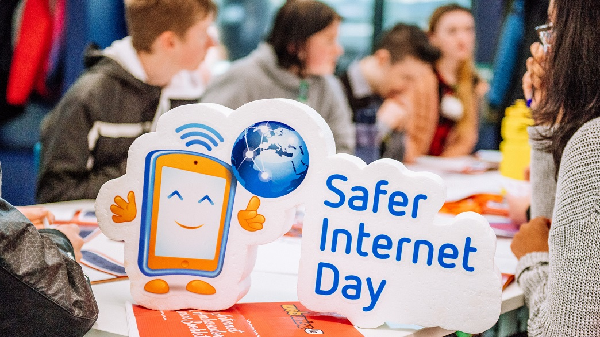
ABOUT SAFER INTERNET DAY
Over the years, Safer Internet Day (SID) has become a landmark event in the online safety calendar. Starting as an initiative of the EU SafeBorders project in 2004 and taken up by the Insafe network as one of its earliest actions in 2005, Safer Internet Day has grown beyond its traditional geographic zone and is now celebrated in approximately 150 countries worldwide.
From cyberbullying to social networking, each year Safer Internet Day aims to raise awareness of emerging online issues and chooses a topic reflecting current concerns.
How your school can be an online safety champion.
On Safer Internet Day, millions of people around the world unite to raise awareness about online safety issues and inspire positive change. So it’s a great opportunity to kickstart your own online safety initiatives for 2022!
You can use eSafety’s ideas and resources to help improve the online safety of your students or young children and your community, not just on Safer Internet Day but every day of the year.
Download Safer Internet Day resources
Get your students, young children and community talking about ways to improve online safety!
Use the downloadable resources in the Safer Internet Day promotion kit, including newsletter articles to send to parents, graphics to post through your social media channels and posters to put up around your school and community.
Make sure you register as a Safer Internet Day champion, so we can let you know as soon as new resources are available.
Promotion kit includes:
• Promotion instructions
• Customisable Safer Internet Day logo and guidelines
• Event posters to print and display around your school and community
• Tip bubble for displaying and sharing your own online safety suggestions
• Top tips for online safety – for kids
• Top tips for online safety – for young people
• Newsletter article – for primary schools and early learning services
• Newsletter article – for secondary schools
• Organisation logo template for eSafety Champions page
• Web banner for display on your website or e-newsletters
• Email signature
• Desktop wallpaper
• PowerPoint slide
To download resources click on the following link: https://www.esafety.gov.au/safer-internet-day/educators
Click on the following link for more information: https://www.esafety.gov.au/safer-internet-day